What Makes a Good Self-Defence Instructor? How to Choose One
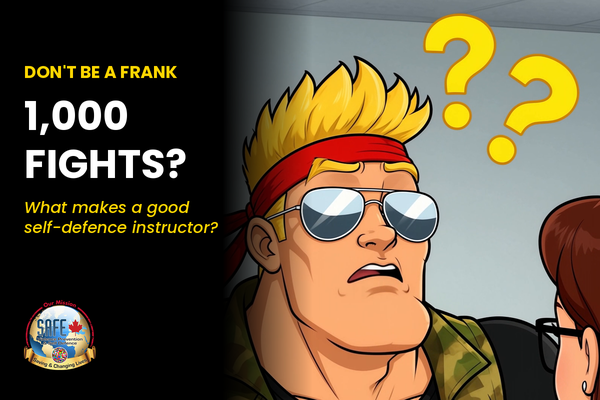
A man once told me he'd make a great self-defence instructor.
His reason? He'd been in 1,000 documented fights.
The first three questions that came to mind:
Why is he getting into so many fights?
Who documents them?
If fighting is his priority, does he even care about prevention?
I convinced him SAFE Certification wasn't for him.
1,000 Fights Is a Pattern, Not a Credential
One fight can happen to anyone. A thousand fights is a pattern.
It means someone keeps missing the warning signs. Or ignoring them. Or walking toward trouble on purpose.
That's not skill. That's a person who doesn't see trouble coming, or doesn't care.
Now picture that person teaching a 16-year-old, a new mom or a senior who lives alone. What will they teach? What they know. And what they know is fighting.
Your students don't need more fights. They need fewer.
The best instructors can tell you how they avoided fights, not how many they won.
Watch: Don't Be a Frank
MYTH: More fights = better instructor.
TRUTH: 1,000 fights = 1,000 times prevention was never attempted.
6 Qualities of a Good Self-Defence Instructor
1. They teach prevention first
Most danger can be spotted early. A good instructor spends real time on awareness, red flags and avoidance. Not 5 minutes before the "real" training starts.
Prevention is the easiest thing to remember under stress. Because it happens before the worst of the stress hits.
2. They can tell you how they stayed out of trouble
Ask for a story about a fight they avoided. A good instructor has plenty. They'll talk about what they noticed, what they said and when they left. They'll also share stories where they got it wrong.
3. They keep it simple
Under stress, people lose fine motor skills, focus and memory. A long list of techniques falls apart fast. Read more on why self-defence techniques fail under stress.
Under stress, you don't rise to the occasion. You fall to what you can remember.
4. They pressure test the right way
Good pressure testing builds recall and confidence. It doesn't scare people off or injure them. See how to pressure test self-defence the right way.
5. They teach regular people, not just fighters
Ask who their students are. If every student is young, fit and loves to spar, the training may not fit you. A good instructor adapts for age, ability and limits.
6. They have a clear method and real training
Ask how they learned to teach. Being good at self-defence and being good at teaching it are different skills. Proper self-defence instructor training teaches you how to teach, not only what to teach.
How to Choose a Self-Defence Instructor: 5 Questions to Ask
Bring these to your first call or class:
"How much of your training is prevention?" Look for a real answer, not "we cover that."
"Tell me about a fight you avoided." Listen for what they noticed and what they did.
"What will I remember in 6 months?" If they list 40 techniques, that's a warning.
"Who do you usually teach?" Make sure people like you are on the list.
"How did you learn to teach this?" Look for a clear method or certification, not just a belt or a fight record.
Red Flags to Watch For
They brag about fights, not about avoiding them.
Every class is all physical, with no time on awareness or what to say.
They teach "win the fight" instead of "get away safely."
They promise you'll be ready for anything.
They can't explain why a skill works under stress.
For Instructors: Where SAFE Fits
If you already teach, ask yourself the same 5 questions. Would your answers hold up?
Most instructors who come to us already teach Krav Maga, martial arts, combatives or personal safety. They add SAFE because their students don't need more techniques. They need decisions they can recall under stress.
SAFE uses one simple order: prevention first, then conflict, then physical skills as a last resort. The goal is to get away, not to win.
Our self-defence instructor certification is built on that order. SAFE has trained 200,000+ people in 12+ countries since 1994.
If you already teach prevention first, not just the fight, you're who we certify.
See the SAFE Certification details here.
Frequently Asked Questions
What makes a good self-defence instructor?
A good self-defence instructor teaches prevention first, keeps skills simple and can explain why they work under stress. They also know how to teach regular people, not just fighters.
How do I choose a self-defence instructor?
Ask how much of the training is prevention, who they usually teach and how they learned to teach. Ask for a story about a fight they avoided. Their answers will tell you more than a belt or a fight record.
Does a self-defence instructor need to be a good fighter?
Physical skill helps, but it isn't the main job. The main job is helping students avoid trouble and get away safely. Lots of fights can be a warning sign, not a qualification.
What is self-defence instructor certification?
It's training that teaches you how to teach self-defence, not only how to do it. SAFE Certification teaches one order: prevention, then conflict, then physical skills as a last resort.
Can I add SAFE to what I already teach?
Yes. Most SAFE instructors already teach martial arts, Krav Maga, combatives or personal safety. SAFE adds a prevention-first framework built for recall under stress.
What are the red flags in a self-defence class?
Watch for bragging about fights, all-physical classes, "win the fight" thinking and promises that you'll be ready for anything. Good training is honest about limits.
Prevention-First Self-Defence
Simple to Remember. Built for Stress.


