How to Avoid a Bar Fight: Why “My Bad” Beats Looking Tough
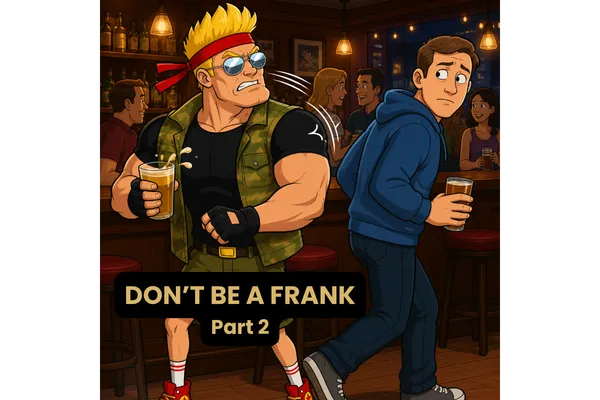
Frank didn’t say a word, but his body said everything.
Chest puffed out
Stiff jaw along with a growl
Squared up, close, staring
These are physical threat cues. They tell the other person, “I’m ready to fight.” Most people read that and back off. Some people read it as a challenge.
Frank thinks intimidation works. It worked once, with someone calm. Try it on someone drunk, angry, or with three friends, and it can go very differently.
What do you really have to lose?
Most people walk into a conflict thinking about pride. Who looks tough. Who backs down.
That’s the wrong way to look at things. Here’s the real one. In a fight, you could lose:
Your freedom
Your money
Your family
Your life
And so could the other person.
At SAFE, the goal is win-win-win. You win, they win, and the people who love you both win. Everyone goes home.
How to deal with a potential bar fight: 5 simple steps
Notice your ego. That reactionary thought, “Who does he think he is?” is your cue to slow down and take a step back.
Say it early. “My bad.” “Sorry, man.” “Let me grab you another one.” Keep it short and sincere.
Show your open hands. Hold your hands up, palms out, at chest height, and keep a safe distance. It says “no threat” and keeps your hands ready.
Maintain space. Step back. Don’t square up or lean in.
Leave. Don’t hang around to prove a point. Walking away isn’t losing. It’s finishing first.
When “sorry” doesn’t work
Sometimes someone isn’t having a bad moment. They’re looking for a fight.
At SAFE, we call this a targeted conflict. If you apologize and they keep coming, that tells you something important. This isn’t about the spilled drink.
Now your job changes. Get distance. Get to an exit, staff, or your friends. Leave. Physical skills are always a last resort; the goal is escape, not winning.
Don’t be a Frank
Frank thinks rising to the occasion means looking big and loud. Here’s what we teach instead:
Two words are easy to remember. “My bad.” Even better, “I’m sorry.” Practise them before you need them.
Want to practise real conversations like this, not just read about them? The R&R Conflict Resolution Drill Series walks you through drills Richard Dimitri and I use to train de-escalation.
Instructors: teaching accountability is critical if you claim to teach violence prevention
Most students think the person who apologizes “lost.” That belief gets people hurt.
Try this in your next class. Run the bump scenario twice. First, the student responds like Frank: chest out, hard stare. Then run it again with “my bad,” open hands, and a step back. Ask the class which one they’d rather face experience.
This is how SAFE teaches: prevention first, then conflict skills, physical as the last resort. If you want a full system you can add to what you already teach, see our self-defence instructor certification.
FAQ
How do you avoid a fight at a bar?
Notice your ego, apologize if you are guilty of what they are accusing you of, show open hands, give space, and leave. Most bar conflicts happen in the moment, not as a planned attack, and a calm “my bad” or “I’m sorry” ends most of them.
Is offering an apology a sign of weakness?
No. It takes more confidence to apologize than to puff up, act tough, and hope you win the fight. The person who can say sorry without needing to win is the one in control.
What if I do apologize and they still want to fight?
That’s a sign they may be targeting you. The goal is to determine if you are dealing with a good guy having a bad day or a bad guy. If your apology doesn't work, stop talking, create distance, and, if possible, get to an exit, and be prepared to defend yourself.
What is verbal de-escalation?
Using your words, tone, and body language to calm a situation down instead of making it worse. Saying “my bad” with open hands and a step back is verbal de-escalation in its simplest form.
Prevention-First Self-Defence
Simple to Remember. Built for Stress.


