What Controlling Looks Like When It's Standing Right in Front of You
I was watching The Housemaid.
Good film. But a few scenes hit close to my teachings.
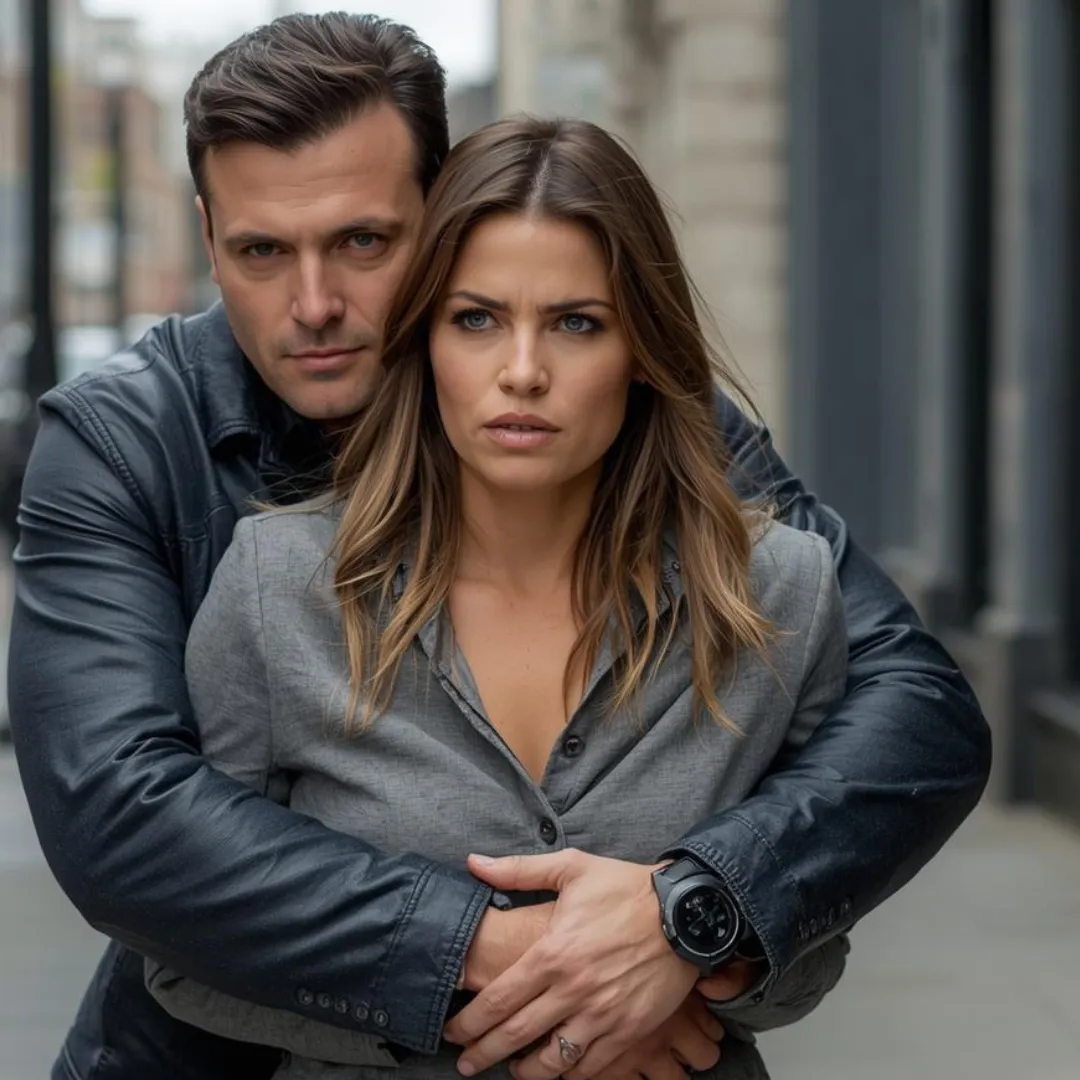
The male character keeps touching the women around him in ways that seem affectionate.
Hand on the back of the neck. Pulling her in. Grip just a little too tight.
That's not affection. That's control.
And the second I saw it, I thought of high school hallways.
I've spent years teaching violence prevention in schools across Ontario. And what I saw in that film? I've seen versions of it in real life.
The Locker Scene Nobody Noticed
I remember walking down a school hallway when I saw a teenage boy with his girlfriend — a student in one of my classes — backed up against a locker. He was in her personal space. Hand flat on the wall above her head. Leaning in.
It appeared he was blocking her exit.
To everyone walking by, it probably looked normal. But her body language said something different.
Guess what I brought up in her next class without making it obvious I was talking to her? As well as bringing it up with her to the teacher to keep an eye on things.
That's the job. Not to embarrass, but to give people the words for what they're already feeling.
Because here's the truth. Most people don't know what is and is not acceptable for this stuff yet. Especially teens, but they usually feel it is wrong.
The Walking Version Nobody Talks About
The locker scene is obvious once you know what you're looking at.
But there's a quieter version that happens in plain sight every single day.
Two people walking side by side.
His arm around her. Pulling her in tighter than she's leaning. She adjusts her stride. He never does. His hand steers her direction. She goes.
Looks like a couple. Feels like something else if you're on the receiving end.
Research on power and control touch is clear on this. The difference between affectionate touch and controlling touch isn't just what happens. It's how free the other person feels to say no.
Affectionate touch is mutual.
Controlling is not mutual.
The Numbers Are Not Small
This isn't rare. This isn't extreme. This is happening in schools, malls, and parking lots right now.
According to Statistics Canada, more than 4 in 10 Canadian teens aged 15 to 17 have experienced dating violence. Emotional and psychological abuse is the most common form.
And only 1 in 11 episodes ever gets reported to an adult or authority.
Read that again.
One in eleven.
That means what you're seeing in hallways is the tip of the iceberg. Most of it stays invisible because nobody taught anyone what to look for.
What to Watch For
None of these signals is proof of abuse on its own. And yes, controlling behaviour can go both ways.
But all of them are worth knowing.
Hand gripping the back of the neck in a controlling way, not lightly
Body positioned to block the exit, not to connect
Standing too close in a way that makes her smaller
Hand flat on the wall above her head
Walking beside her, but steering her direction
She adjusts her stride. He never does.
She laughs it off. He doesn't let go.
The pattern matters more than any single moment.
One of these alone might mean nothing. Several of them together mean pay attention.
Why This Is Hard to See
Coercive control doesn't announce itself.
It doesn't look like a crime show. It doesn't come with warning labels.
It starts quietly. A grip that looks like a hug. A lean that looks like closeness. A hand on a wall that looks like flirting.
The person experiencing it often doesn't have words for it yet. They just know something feels off.
And by the time it gets loud, the pattern is already deep.
That's exactly why we teach prevention first. Not reaction. Not damage control.
Recognition. Early. Before quiet becomes loud.
What You Can Do Right Now
If you're a parent, start the conversation at home. You don't need to make it dramatic. Just point to moments. Ask questions. "What do you think about that?" goes a long way.
If you're a teacher or youth worker, teach this as a skill. Show them what controlling body language actually looks like. Give them the words. Because if they can't name what they're seeing, they can't do anything about it.
If you're an instructor, this is exactly the kind of content your students need and rarely get anywhere else.
👉 Not sure where to start? Explore SAFE here.
Want to Teach This Yourself?
This is the kind of content that changes how people see the world around them.
If you're an instructor or aspiring instructor, SAFE Certification gives you a complete system built around recall under stress. Simple content. Designed for regular people, living regular lives.
👉 Learn more about SAFE Certification.
The Bottom Line
Violence prevention isn't about waiting for the obvious.
It's about recognizing the quiet version before it gets loud.
That's what we've been teaching since 1994. Simple decisions. Real-world recall. Content people can actually remember when it counts.
Changing & Saving Lives Since 1994.
👉 Start here if you're new to SAFE.
Keep SAFE!
Chris Roberts


