The Right Words at the Wrong Time Can Still Get You Hurt
By Chris Roberts, SAFE International
One of the things I value most about the SAFE Certification community is that it attracts people who are already good at what they do — and still want to get better.
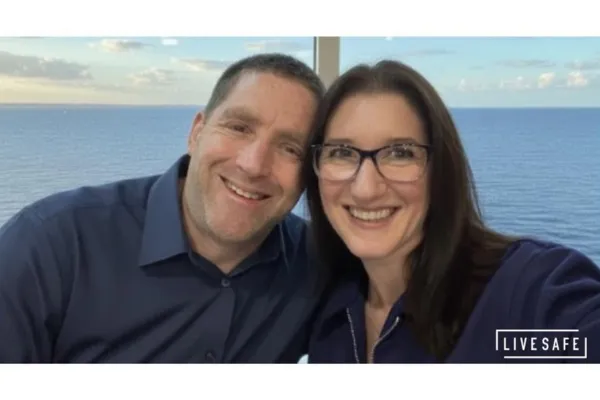
Shellé and Dave Friedman are a perfect example of that.
Shellé and Dave are Directors of LiveSafe Education and Krav Maga Australia, based in Moorabbin, Melbourne, Victoria. Shellé and Dave deliver trauma-informed personal safety training to schools and workplaces, specializing in occupational violence prevention, de-escalation and conflict management across healthcare, government, aged care, and real estate. Dave is also the Chief Instructor, and Shelle specializes in teaching women at Krav Maga Australia. Their training is realistic, accessible, and safe for every learner, including neurodiverse students.
They did not go through SAFE Certification because they needed to. They went through it because they wanted another set of eyes — a peer perspective on the work they are already doing at a high level. That is exactly what the certification is there for.
Recently, Dave reached out with a question about a project they are working on. I thought the question — and the conversation that followed — was worth sharing.
The Scenario
Dave and Shellé are helping build an online animation scenario as a refresher to an in-person workshop on safe interactions. The organization they are working with evaluates claims from victims of road accidents and determines their needs — from monetary compensation to government-funded home modifications and medical bills.
Most of their interactions are non-confrontational. But staff can occasionally face verbal abuse, inappropriate sexual references, or physical aggression — caused by pre-existing predatory behaviour, emotional dysregulation, or acute brain injury as a result of the road trauma.
The scenario built involves a staff member conducting a home visit. The client’s behaviour shifts. The risk level rises. And at a certain point, the scenario branches into two directions:
Branch 1: The client responds to empathy. Their behaviour softens. The staff member feels comfortable continuing the meeting.
Branch 2: The client does not respond positively. The risk indicator moves from orange to red. The staff member needs to exit safely.
Dave’s question was about Branch 2 — specifically, what should the staff member say to facilitate an early exit?
Two options were offered in the initial build of the scenario. Dave felt these options could be improved but was struggling with the wording. The 2 initial options were:
“I can see this is upsetting. I am going to leave now, and we’ll follow up later.”
“I can see this is upsetting. Let’s pause things here, and we’ll follow up later.”
And he asked for my thoughts.
The Problem With Both Phrases
Here is what I told him.
Both phrases have the same flaw. The moment you say “I can see this is upsetting,” you risk being heard as:
You are being emotional.
I am judging your reaction.
You are the problem here.
For someone dealing with emotional dysregulation or a brain injury, that kind of phrase can escalate rather than de-escalate. You are naming or calling out their behaviour, and that can feel like an accusation — even when you mean it with complete compassion.
My first thought was something like:
“I can understand why you might be upset. I would be too. I want to help, but maybe we both need a little time to clear our heads.”
Or something along those lines. Here is why that works better:
You are not judging them. You are understanding them.
“I would be too” creates a connection and removes the perceived power imbalance.
“We both need time” does not sound like you are telling them to calm down. It sounds like a shared pause — something you both need, not something being done to them.
A few other options worth considering:
“This is a lot to deal with, and I want to make sure I give this the attention it deserves. Let me follow up when we can both give it the time it needs.”
“I want to make sure I am helping you properly. Let me step out, and we will connect again soon.”
“I think we have covered a lot today. Let me give you some space, and we will pick this up shortly.”
Key principles across all of them:
Never name their emotional state directly.
Make the exit mutual, not one-sided.
Leave the door open so it does not feel like abandonment.
Keep it short. The longer the phrase, the more time for it to go wrong.
Position First. Speak Second.
Here is something that does not always get enough attention in these conversations.
None of those phrases mean anything if the staff member is not already positioned to exit safely before they open their mouth.
Before any exit statement is made, the staff member should already have:
Positioned themselves between the client and the exit where possible.
Avoided sitting in deep furniture or tight spaces that are difficult to get out of.
Kept their bag and keys accessible.
Never let the client get between them and the door.
I could say much more on this. I have spent years teaching companies whose staff — including nurses — work in clients’ homes. Positioning is not a small detail. It is the foundation everything else sits on.
The words come last. Not first.
When It Is No Longer a Job Issue
The second point is equally important — and honestly, one of the harder ones for professional staff to accept.
At some point, if de-escalation stops working, this is no longer a job issue. It becomes a personal safety issue.
Can the staff member shift from “How do I help this client?” to “How do I get out safely?”
Those are two completely different mindsets. You cannot operate both at once.
I used to always bring this up when teaching: people take more risks at work than they ever would in their personal lives. And some organizations put real pressure on employees to get the job done — even the ones that say “Your safety is the number one priority” — until something goes wrong more than once, if you know what I mean.
The challenge for many staff is that the fear of not doing their job, or even losing it, gets put ahead of the very real possibility of getting hurt.
That is a conversation worth having before anyone walks through a client’s door.
What SAFE Certification Looks Like in Practice
Dave loved the response. That exchange is a good example of what I hope SAFE Certification offers—not just a course, but a community where experienced instructors can discuss questions and get honest, practical answers.
I will also be the first to admit that I learn as much from the people I certify as they learn from me. That is what makes it worth doing
Shellé and Dave are listed on the SAFE International Instructor Page. If you work in occupational violence prevention, healthcare, aged care, or any field where staff face these kinds of situations, their work is worth knowing about.
And if you are an instructor looking for that kind of peer community, SAFE Certification might be worth exploring.
“Under stress, you don’t rise to the occasion. You fall to what you can remember.”
Chris Roberts
Founder, SAFE International
Changing & Saving Lives Since 1994


