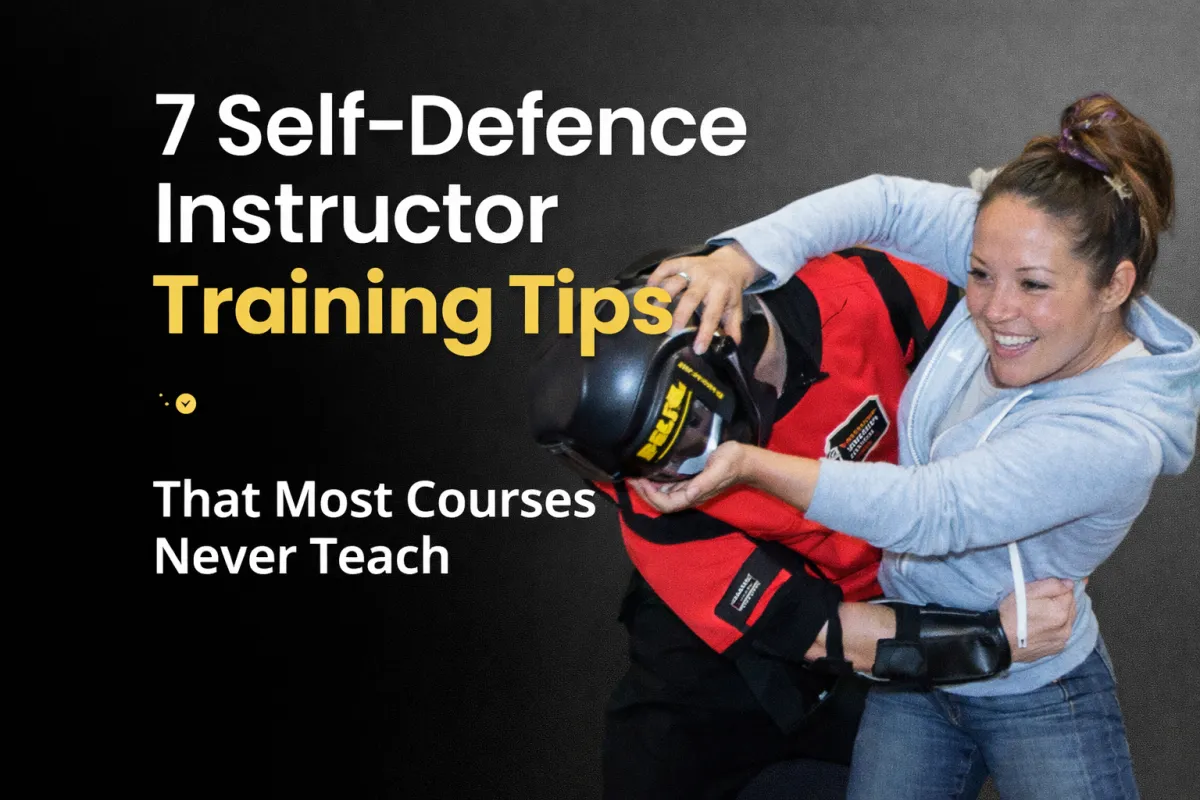
7 Self-Defence Instructor Training Tips Most Courses Never Teach
Self-defence instructor training should involve far more than learning techniques.
Anyone can memorise drills.
The real challenge is learning how to teach people skills they can actually recall under pressure.
After more than 30 years teaching violence prevention and self-defence, one thing has become clear:
Simple instruction people remember is far more valuable than complicated techniques they forget.
Because under stress, you don’t rise to the occasion — you fall to what you can remember.
For instructors exploring structured self-defence instructor training, these principles can dramatically improve the way you teach.
If you are looking for a structured framework for teaching real-world skills, you can explore our
→ Self-Defence Instructor Certification Program
1. Teach Prevention Before Physical Skills
Many courses begin with strikes, blocks, and defences.
That is backwards.
Most violence can be avoided earlier through:
awareness
boundary setting
situational decision making
A good instructor helps students recognise problems before they become physical.
Prevention skills are often the most valuable self-defence skills a person can learn.
2. Focus on Recall, Not Performance
Some techniques look impressive in training.
But the real question is simple:
Will someone remember this under stress?
Under fear and adrenaline:
memory narrows
fine motor skills degrade
complex sequences disappear
Effective self-defence instruction focuses on simple decisions and simple actions that can be recalled quickly.
Because under stress, you don’t rise to the occasion — you fall to what you can remember.
3. Teach Principles, Not Technique Collections
Many instructor courses teach long lists of techniques.
The problem is that technique collections are difficult for students to remember.
Instead, strong instruction focuses on principles that apply across many situations, such as:
controlling distance
protecting vulnerable targets
escaping quickly
When students understand principles, they can adapt more effectively to unpredictable situations.
4. Train Decision Making, Not Just Movement
Real violence is chaotic and unpredictable.
Students need to practice making decisions under pressure, not just performing movements.
This means incorporating training that helps students recognise:
when to disengage
when to set verbal boundaries
when physical action may be necessary
Teaching students how to think during conflict is often more important than the specific technique they use.
5. Use Scenario-Based Training Carefully
Scenario training can be valuable when used correctly.
It helps students experience stress and uncertainty in a controlled environment.
However, scenarios should reinforce simple responses, not overwhelm students with complex drills.
The goal is to help students recognise patterns and apply the principles they have already learned.
6. Build Confidence Through Clarity
Confidence does not come from learning dozens of techniques.
Confidence grows when students clearly understand:
what to look for
what decisions to make
what simple actions to take
Clear instruction and repetition help students develop trust in their ability to respond if needed.
7. Never Forget Who You Are Teaching
Many self-defence programs are influenced heavily by athletic training environments.
But most students are not athletes.
They are:
parents
teenagers
professionals
everyday people
Effective instructor training focuses on helping regular people learn practical skills they can actually remember and apply.
Why Instructor Training Should Focus on Teaching Skills
A good instructor course should not simply teach you how to perform techniques.
It should teach you how to help others:
recognise danger sooner
manage conflict more effectively
respond with simple actions when necessary
That is the difference between collecting techniques and teaching real self-defence.
If you are considering becoming an instructor, you may also find this guide helpful:
→ How to Become a Self-Defence Instructor
Final Thought
Teaching self-defence is a serious responsibility.
The goal is not to impress students with complicated techniques.
The goal is to give them skills they can remember and apply when it matters most.
Because under stress, you don’t rise to the occasion — you fall to what you can remember.
If you want to explore a structured approach to self-defence instructor training, you can learn more about the SAFE Certification here:
→ SAFE Self-Defence Instructor Certification
Keep SAFE!
Chris Roberts


