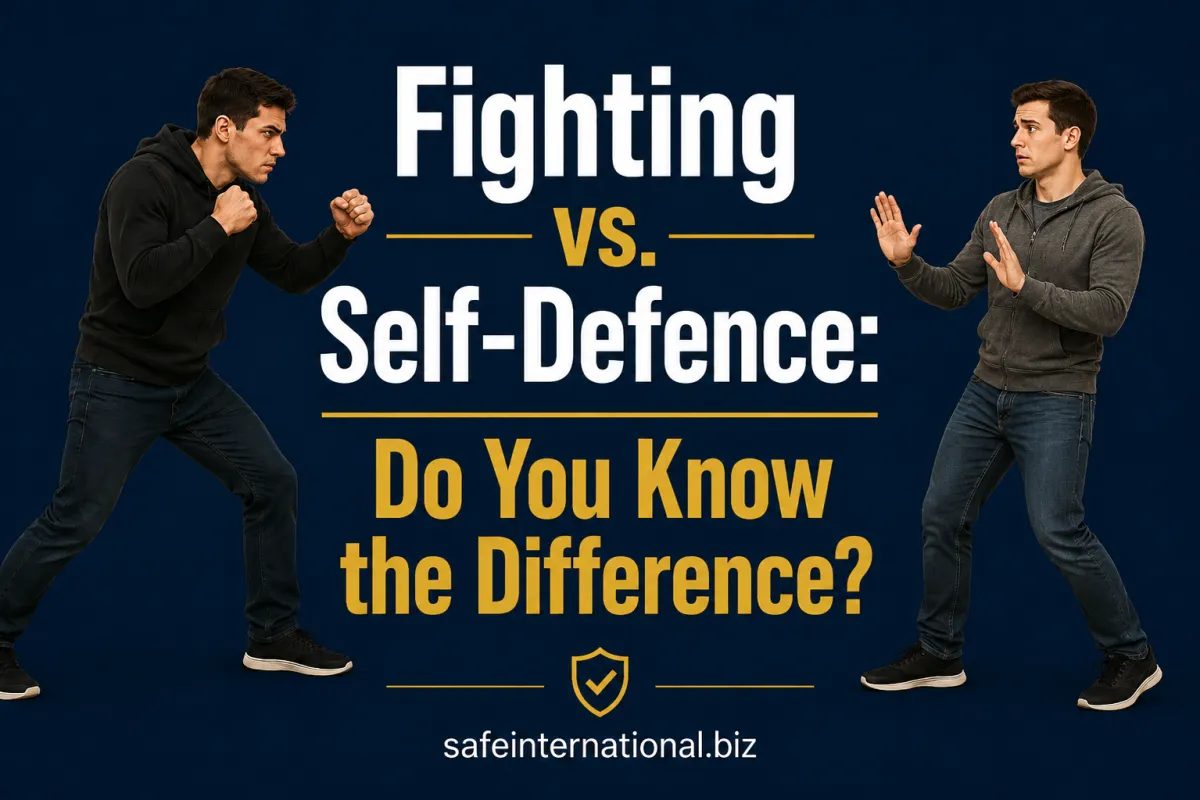
Fighting vs. Self-Defense: 10 Differences That Could Keep You Out of Jail
Most people have never been taught the differences between fighting and self-defence.
They assume they are both the same.
That lack of education can lead to many consequences that few ever consider.
Two people end up in a physical confrontation. One might walk away. One or both might get charged, and many other variations.
What often decides who is who has nothing to do with who threw the first punch. It comes down to intent, context, and choices made before, during, and after the situation.
The 10 distinctions below are not theory. They are the kind of clear thinking that can protect you physically, legally, and emotionally.
What Is the Difference Between Fighting and Self-Defence?
Watch this short video first. It breaks down the core distinction in under four minutes -- and the push-back scenario at the start might surprise you.
Here is the key point from that video:
The moment someone gets in your face and pushes you -- and you push back -- you just joined the fight. You are no longer a defender. You are now a participant in the escalation.
That one moment can change everything legally.
Self-defence is not about who started it. It is not about punishing someone, teaching them a lesson, or proving you are right. Self-defence is about going home. Going back to your day, the way you started it before the conflict happened.
Fighting means both parties are in it by choice. Self-defence means one person is trying to escape or avoid harm.
That single distinction changes everything -- legally, morally, and practically.
10 Differences That Could Keep You Out of Jail
1. Mutual vs. One-Sided
In a fight, both people have chosen to be there. In self-defence, one person has that choice made for them. That difference in consent is often the first thing a court looks at.
2. Intent
Fighting is about winning. Self-defence is about surviving and leaving. If your goal is to hurt the other person rather than get away from them, that changes everything from a legal standpoint.
3. Walk Away?
Fighters ignore the exit. Self-defenders look for it first. If there was a reasonable way out and you did not take it, that matters in court and in the real world. But yes, there are many circumstances when you might not be able to take the exit, but understanding those circumstances is critical.
4. Legal Risk
Mutual combat can lead to criminal charges for both parties, even if you did not start it. In Canada, pushing someone with the intent to harm or threaten is already an offence. Self-defence is a legal right, but only when the force used is reasonable and proportionate to the threat.
5. Mindset
Fighting is driven by ego. The need for safety drives self-defence. If you find yourself moving towards a situation -- wanting to correct someone, prove them wrong, or hurt them for whatever reason -- that is no longer self-defence. That is a fight.
6. Goal
A fight drags on until someone wins or someone stops, or worse. Self-defence ends as fast as possible. The moment the threat is gone, the self-defence is over. In both cases, the physical part might be over, but the legal aspects might begin.
7. De-escalation
Fighters escalate the aggression and talk. Self-defenders try to calm, avoid, or create distance. Attempting to reduce the situation before it goes physical is not a weakness. It is one of the clearest markers that you were not the aggressor. And nowadays, one thing you can almost count on is that someone is watching, very often taking a video of your confrontation.
8. Motive
Fights are often about pride or payback. Self-defence is about protection. Motive matters because it explains why things unfolded the way they did.
9. Legal Lens
One is a crime. One is a legal right. The difference often comes down to documentation, witnesses, and whether you made reasonable efforts to avoid the situation before force became necessary.
10. Aftermath
One ends in jail. One ends in safety. But only if it was done right. Using more force than the threat required, continuing after the threat has stopped, or failing to leave when you could -- these turn self-defence into something else.
Why This Distinction Matters
Most self-defence training never covers this in much detail. Classes go straight to the physical skills without addressing the context in which those skills exist.
That is a problem. A common phrase I have heard in so-called "self-defence" seminars is "hit first, ask questions later". Might sound cool, but it is far from an intelligent strategy.
Knowing how to throw a punch means very little if you do not understand when throwing it is legal, justified, or necessary. And it means even less if you do not know how to avoid getting to that point in the first place.
At SAFE, this distinction is part of what we teach from day one. Not because it is interesting. Because it is important.
Know the difference. Teach it. Live by it.
The SAFE Violence Prevention & Self Defence Certification addresses this distinction directly.
To learn more about the certification, with instructors certified in over 10 countries, visit:
Become a Certified Self-Defence Instructor | SAFE International
Keep SAFE,
Chris Roberts
www.safeinternational.biz


